

THE FREE GIFT OF ATONEMENT
I. THE FALLEN CONDITION OF HUMAN NATURE
(return to list of contents)
The first transgression was a free transgression of the law of God exercised by our first parents under the influence of Satan. Their motivation for transgression was pride and egoism (self-worship) to deify themselves and become equal with God and independent from him. This disobedience caused the fall of the human race from its primordial righteousness into the dominion of sin, corruption and death.
The root of sin is in the free will of man. Evil is a state of the will. It is a fallen will with regard to God. Evil is a personal attitude of revolt against God. Evil does not originate from God. Evil originated in the spiritual sin of pride of a high-ranking angel whereby he wished to be God by his own power apart from the true living God: “I will ascend above the heights of the clouds, I will be like the Most High” (Isaiah 14:14). Thus, the origin of sin is a strong desire of self-deification by self-effort based on the rejection of the empowerment of the grace of God because of pride. Therefore, any ritualistic practices of fasting or praying and washing of the body several times a day, if motivated and done apart form the grace and love of God in Christ, are nothing more than futile attempts of self-sanctification and self-justification which do not bring man closer to God, because they do not cause internal changes that purify and heal the corrupted human nature. Put differently, these practices by themselves do not cleanse the human nature from its evil tendencies and thoughts. On the contrary, these practices deepen the separation and estrangement of man from God, as self-righteousness inevitably leads to pride, the sin of Satan, the origin of all evil, which keeps man separated from God preventing him from true fellowship with God: “But we are all like an unclean thing, and all our righteousnesses are like filthy rags; we all fade as a leaf, and our inequities, like the wind, have taken us away” (Isaiah 64: 6).
Good works alone, in the absence of strong fellowship with Christ springing from true faith in his redemption and his powerful resurrection, do not provide forgiveness of sins, “Therefore by the deeds of the law no flesh will be justified in His sight” (Rom. 3:20a). Good deeds do not outweigh bad deeds. They do not appease God’s wrath against sin, nor do they make up for bad deeds. One cannot save himself from the wrath of God by his good deeds. Christ alone could free a person from the power and bondage of sin, purify, cleanse and heal his fallen corrupted nature, and create a new heart in him: “Therefore, if anyone is in Christ, he is a new creation. Old things have passed away. Behold, all things have become new” (2 Corinthians 5: 17). The fall of Adam contaminated and corrupted the nature of the entire human race: “Then the Lord saw that the wickedness of man was great in the earth, and that every intent of the thoughts of his heart was only evil continually” (Genesis 6: 5); “They have all turned aside, they have together become corrupt; there is none who does good, no, not one” (Psalms 14: 3); “For all have sinned and fall short of the glory of God” (Romans 3: 23, 10-18).
Although Adam’s natural descendants did not take part in his original transgression and God will not judge them for it, they are biased toward committing sins because they are born with his corrupted fallen human nature, which fell under the dominion of sin and death deprived of the sanctifying divine grace. This bias toward evil inherited from Adam and Eve is what Orthodox Christians call “The Original Sin.” They inherited the fallen human nature which is a result and consequence of his original transgression. This is similar to a baby born with a venereal disease which he contracted form his mother in her womb. Although the baby is innocent, he is suffering from the consequences of his mother’s sin of irresponsible promiscuous sexual behavior. Man is not punished for the disobedience of Adam. Rather, man receives mortality from Adam’s corrupted seed: “Therefore, just as through one-man sin entered the world and death through sin, and thus death spread to all men, because all sinned” (Rom. 5: 12). The original transgression has caused the sinful state of the human nature in which we are born. Sinful human inclinations and tendencies include lust, envy, greed, pride, selfishness, dishonesty, etc. This created a barrier between humanity and the all-holy God: “But your inequities have separated you from your God; and your sins have hidden His face from you, so that He will not hear” (Isaiah 59: 2).
Modern scientific studies in the realm of human personality have reinforced the Biblical conclusion that man is characterized by a typical egocentric orientation, and that this is a transmitted feature of the human species. On this matter, the Biblical testimony is illuminating in pointing to a time when this condition did not exist in the human race.
The original transgression resulted in far-reaching consequences:
1. It resulted in the obscuring and tarnishing, but not total effacing, of the image of God in man. This partially blinded his mind to spiritual values.
2. It resulted in the loss of the primordial righteousness and innocence of man resulting in a break in communion between fallen man and God.
3. It resulted in man’s bodily corruption, bodily sickness, aging and finally physical death which was permitted by God to prevent perpetuation of evil on earth.
4. It resulted in the corruption of human nature, which began to rebel against man, and enslave him. Sinful passion (concupiscence) grew up in him, as the apostle Paul put it: “For the good I will to do, I do not do; but the evil I will not to do, that I practice. Now if I do what I will not to do, it is no longer I who do it, but sin that dwells in me. I find then a law, that evil is present with me, the one who wills to do good. For I delight in the law of God according to the inward man. But I see another law in my members, warring against the law of my mind, and bringing me into captivity to the law of sin which is in my members. O wretched man that I am! Who will deliver me from this body of death?” (Romans 7: 19-24).
5. It resulted in the spread of spiritual death (the cessation of fellowship between the human person and God). Man lost the sanctifying divine grace. Hades was opened. Paradise was closed. Hades was divided into two regions: the upper region—the bosom of Abraham, a place of waiting; and the lower region—a place of torment (Luke 16: 22-23). The souls of all the righteous who had died throughout history before Christ completed his atonement by his death on the cross entered the upper region of hades, and waited for the redemption of Christ.
6. It weakened the intelligence and free will of man, but did not destroy it. The devil can make seductive suggestions, but does not have the power to compel the person to do something against his will. The result of the weakened human intelligence and will is that man became incapable of developing his spiritual life. Man’s good deeds, in the absence of a life of fellowship with Christ through faith and love, do not change him spiritually, as it does not contribute to his salvation and deification (conforming to the image of God in Christ Jesus). His communion with God is not restored in the absence of true faith in Christ working with love.
II. GOD’S RESPONSE: SALVATION
(return to list of contents)
Salvation is the dynamic gradual process of progressive sanctification/deification in Christ: “God from the beginning chose you for salvation through sanctification by the Spirit and belief in the truth” (2 Thessalonians 2: 13b). The journey of salvation begins with receiving Christ as the personal Lord and Savior by true penitent faith. The believer is justified (forgiven) by faith through God’s mercy and grace. "For by grace you have been saved through faith, and that not of yourselves; it is the gift of God, not of works, lest anyone should boast" (Ephesians 2: 8-9). The believer is saved by true penitent faith, not by meritorious works. “I do not set aside the grace of God; for if righteousness comes through the law, then Christ died in vain” (Galatians 2: 21). Justification removes the believer’s guilt.
True saving faith is full and unconditional reliance and trust in Christ for salvation. It is an entire way of renewed life. It involves the whole person, and consists of three essential elements: (1) the intellectual element which is mental belief in, assent to, and acceptance of the message of the gospel of Christ and his atoning work on the cross; (2) the loving attitude (emotional) element which is expressed in the love to Christ: “Abide in My love” (John 15: 9b); “You shall love the Lord your God with all your heart, with all your soul, and with all your mind” (Matthew 22: 37). This love leads to complete trust in Christ, the savior; (3) the volitional element which is a strong commitment and willful loyalty and submission to Christ’s lordship, and personal surrender of one’s will to God’s will through obedience to Christ’s teaching. True saving faith is the way of renewed life in a covenantal relationship with God in Christ.
Human good works are the necessary expression of true faith. "As the body without the spirit is dead, so faith without works is dead also" (James 2: 26, 21). Faith is known by its works as a tree is known by its fruit. Faith bears fruit through responsive love toward the neighbor. "In Christ Jesus neither circumcision nor uncircumcision avails anything, but faith working through love" (Galatians 5: 6).
Salvation is not earned by human good works. It is not by merit. It is totally and entirely an act of divine grace in response to penitent faith that issues in the works of love. However, in that act of divine grace, humans remain totally and entirely free. God’s grace is never forced. Divine grace and human freedom work together. The free human cooperation is itself the work of the Holy Spirit in man. Man could not come to God, so God has come to man. Just as Christ and the Father dwell in each other, so we are to dwell in Christ and he in us (John 17: 21-23), so that we become by grace what God is by nature, being made adopted children of God in Christ, the Son. The communicable divine attributes (e.g. love, mercy, long-suffering, goodness, truth, etc.) are refracted in human willing and action. However, these divine attributes are never communicated to creatures in the fullness in which they exist in God, but only proportionately in relation to the limited capacities of creatures. God alone is eternally perfect.
Salvation is the motion toward becoming like Christ, toward union with God (theosis), whereby the believer shares in the divine life, light, and love through the grace of the Holy Spirit. It is a process of spiritual regeneration and growth in grace through close fellowship with Christ, as the believer experiences internal transformation, whereby the image of God is restored in the believer gradually. Spiritual regeneration (new birth) amounts to radical reversal of the will by which the selfless love of God begins to take the place of the godless love of self and of idolized creaturely goods. This breaks down the dominion of sin, and leads to Christian freedom from sin (Ephesians 4: 23-24). The believer is saved as long as this process is active. This means that even if a person dies immediately after his justification by penitent faith through the grace of God without having the chance of manifesting the fruits of his faith in many good works of love, he is eternally saved because he died in the state of being saved (Luke 23: 33, 39-43). The merit of Christ is equally effective whether faith is starting and weak, or advanced and strong (Luke 23: 43; Matthew 20: 1-16). The process of spiritual growth is one of the slowest of all human movements. It is a long journey. Deification is a process that goes on eternally. It is the fulfillment of our human destiny.
Salvation has two aspects: a negative aspect and a positive aspect. The negative aspect is reconciliation with God, which follows the forgiveness of sin, and deliverance and freedom from its associated guilt (justification). Thereby, the believer becomes an adopted child of God. The positive aspect is internal regeneration and renewal of the human nature encompassing spiritual growth in new life in Christ communicated by the Holy Spirit of the living God. His sanctifying grace is a disposition to act meritoriously. It transforms the human soul supernaturally. This process results in progressive sanctification and deification: “Therefore, if any one is in Christ, he is a new creation; old things have passed away; behold, all things have become new” (2 Corinthians 5: 17); “But according to His mercy He saved us, through the washing of regeneration and renewing of the Holy Spirit” (Titus 3: 5b).
Man is incapable of freeing himself from his own deep propensities toward evil. The blind cannot make himself see by wishing it. The dead cannot voluntarily decide to rise. The soul that is spiritually dead is unable to make the slightest move toward God by its own power. In order for human beings to exercise their will in obedience to God, they need help outside themselves and their own abilities. The grace of God provides this empowerment. God heals the wounded human will, and strengthens it by his Holy Spirit to both love and obey his commandments. "Now may the God of peace Himself sanctify you completely; and may your whole spirit, soul, and body be preserved blameless at the coming of our Lord Jesus Christ" (1 Thessalonians 5: 23).
The process of salvation is a divine-human synergistic activity. It requires the cooperation of two unequal, but equally necessary forces: divine grace and human will. Christ said: "Behold, I stand at the door and knock. If anyone hears My voice and opens the door, I will come in to him and dine with him, and he with Me" (Revelation 3: 20). God knocks at the door of the human heart, but waits for the person to open it to receive him. The grace of God invites all, but compels none. God makes the first movement toward man, as salvation is impossible from man’s will alone. The work of divine grace precedes human decision and the cooperation of the person with the saving power of God. It enables and empowers the person to exercise his God-given free will to freely choose either to accept or to reject the salvation offered by the grace of God in Christ Jesus. The ability of the human will to respond to divine grace and to provide personal consent is itself conferred by grace. "Turn us back to You, O Lord, and we will be restored. Renew our days as of old" (Lamentations 5: 21; Psalm 80: 19).
God has provided the grace of atonement in Christ, and has sent the Holy Spirit to prompt, guide, and empower, and do God’s work through the yielded believer: “But when the Helper (the Holy Spirit) comes, whom I (Christ) shall send to you from the Father, the Spirit of truth who proceeds from the Father, He will testify of Me” (John 15: 26). Through the grace of God, the believer accepts Christ by faith, repents, abides in Christ in full obedience to him, and allows the good works of the Holy Spirit to be manifested through him. Accepting, and cooperating with, the grace of God does not earn the person any merit.
“If you love Me, keep My commandments. And I (Christ) will pray the Father, and He will give you another Helper, that He may abide with you forever—the Spirit of truth, whom the world cannot receive, because it neither sees Him nor knows Him; but you know Him, for He dwells with you and will be in you” (John 14: 15-17); “I (Christ) am the vine, you are the branches. He who abides in Me, and I in him, bears much fruit; for without Me you can do nothing. If you keep My commandments, you will abide in My love” (John 15: 5, 10a); “For the grace of God that brings salvation has appeared to all men, teaching us that, denying ungodliness and worldly lusts, we should live soberly, righteously, and godly in the present age” (Titus 2: 11-12; Philippians 3: 12).
What determines the eternal destiny of a person is his spiritual condition at his death. If he is in communion with Christ in his active journey of sanctification through the grace of the Holy Spirit, his journey continues after his death in the immediate presence of Christ (Luke 23: 39-43; John 5: 17). This is true whether he is at the beginning of the journey or at an advanced stage. On the other hand, if the person has fallen from the grace of God and is no longer in communion with Christ, his fate is separation and estrangement from God in eternal darkness and torment: “Therefore, let him who thinks he stands take heed lest he fall” (1 Corinthians 10: 12); “If anyone does not abide in Me (Christ), he is cast out as a branch and is withered; and they gather them and throw them into the fire, and they are burned” (John 15: 6); “For if we sin willfully after we have received the knowledge of the truth, there no longer remains a sacrifice for sins, but a certain fearful expectation of judgment, and fiery indignation which will devour the adversaries. Anyone who has rejected Moses' law dies without mercy on the testimony of two or three witnesses. Of how much worse punishment, do you suppose, will he be thought worthy who has trampled the Son of God underfoot, counted the blood of the covenant by which he was sanctified a common thing, and insulted the Spirit of grace? For we know Him who said, "Vengeance is Mine, I will repay," says the Lord. And again, "The LORD will judge His people." It is a fearful thing to fall into the hands of the living God” (Hebrews 10: 26-31).
Ethical laws could not by themselves rescue humanity from spiritual death. Ethical laws limit sin, thereby improving the world, but they cannot save the world from corruption and moral decay. Humanity could be saved only if the human nature is purified and deified by its union with its immortal and incorruptible divine Creator, the only source of life and goodness in the universe. This requires continual communion in ever closer fellowship with Christ through the Holy Spirit. While obedience to ethical laws may prevent some sins, it could not liberate man from the limitations of his corrupted nature that urges him to sin: “Christ Jesus came into the world to save sinners, of whom I am chief” (1 Timothy 1: 15b). Christ spoke through the prophet Isaiah saying: “The Spirit of the Lord God is upon Me, because the Lord has anointed Me to preach good tidings to the poor; He has sent Me to heal the brokenhearted, to proclaim liberty to the captives, and the opening of the prison to those who are bound; to proclaim the acceptable year of the Lord” (Isaiah 61: 1-2a). Salvation purifies the person to the point that “sin shall not have dominion over you, for you are not under law but under grace” (Romans 6: 14). Salvation is a movement form sin to the likeness of Christ, from slavery of sin to true freedom in Christ, from darkness to light, from falsehood to truth, from despair to hope, and from death to life. And once there, it is a movement form truth to greater truth, from wisdom to greater wisdom, form joy to deeper joy, from understanding to deeper understanding, from all-embracing love to more all-embracing love.
In the incarnate Son of God, the believer becomes a son of God the Father by adoption through the grace of the Holy Spirit: “But as many as received Him (Christ), to them He gave the right to become children of God, to those who believe in His name” (John 1: 12). The believer gains the consciousness and boldness of being an adopted son/daughter, through the Holy Spirit: “For as many as are led by the Spirit of God, these are sons of God. For you did not receive the spirit of bondage again to fear, but you received the Spirit of adoption by whom we cry out, ‘Abba, Father.’ The Spirit Himself bears witness with our spirit that we are children of God, and if children, then heirs—heirs of God and joint heirs with Christ, if indeed we suffer with Him, that we may also be glorified together” (Romans 8: 14-17). Christ, the incarnate Son of God, reveals God the Father to us inviting us to love him as our Father: “No one has seen God at any time. The only begotten Son, who is in the bosom of the Father, He has declared Him” (John 1: 18; Hebrews 1: 3). Man is invited to participate in the perfect love and communion of the Holy Trinity, while maintaining his personal reality (hypostasis), into eternity. As an adopted son, the believer participates in the divine nature receiving the uncreated light and love of God (2 Peter 1: 4).
The redemption provided by Christ overcame the formidable barrier that sin had erected between man and God (Matthew 27: 51), and removed the penal character from the consequences of the original sin. Sufferings of whatever kind, and the other miseries of human life emanating from the fall of Adam serve the children of God as opportunities for discipline, confirm and strengthen them in the good, and are means of the manifestation of God’s glory. In addition, Christ’s redemption provides the empowerment of exceeding grace by the Holy Spirit: “For as by one man’s disobedience many were made sinners, so also by one Man’s obedience many will be made righteous” (Rom. 5:19).
The incarnation of the Son of God, his life and work on earth, his death and resurrection have resulted in the removal of several obstacles that kept man away from God, and provided for the means of transforming and deifying man. Christ broke down the three barriers that separated man from God: the barrier of nature by his incarnation, the barrier of sin by his atoning death on the cross, and the barrier of death by his resurrection:
1. The barrier separating the nature of God and the nature of man was removed, as the two natures were united without confusion in the person of Christ. This resulted in the deification of the human nature in Christ. Christ, the first-fruit of our human substance possessing the fullness of divine grace, imparts life and incorruptibility to those that follow him, as his divine energies interpenetrate their humanity. This is similar to a steel sword placed into a hot fire until it takes on a red glow. The steel substance of the sword (representing human nature) does not change into fire, but it picks up the properties of fire (representing the divine energies). The true followers of Christ are deified, not by nature and sonship as Christ is, but by grace and adoption.
2. The bodily death of Christ, the God-man, on the cross has removed
the obstacle of sin between man and God. Man has become a partaker
of the divine nature (2 Pet. 1: 4) by means of:
i. Reconciling God’s justice/holiness with God’s mercy/love.
ii. Atoning for the sins of the penitent believers, and thereby, liberating them from the bondage of sin. Forgiven sins will not be called to account in the general judgment of the last day (Isaiah 43: 25; Jeremiah 31: 34; Ezekiel 18: 22).
3. After his atoning death on the cross, Christ opened the eternal
gates of paradise which had been closed after the fall of Adam and Eve,
and descended into hades to accomplish the following
important tasks:
a. Christ preached to all the souls of people, who died before his atoning death on the cross, and announced to them the binding up of the demonic powers (Matthew 12: 28, 29; Luke 10: 17, 18; John 12: 31, 32; Colossians 2: 15; Revelation 20: 1-3). However, Satan is not totally inactive (Acts 5: 3; 1 Corinthians 5: 5; Ephesians 6: 11). But he cannot deceive the Church, and he cannot prevent the proclamation of the gospel of Christ to the nations.
b. Christ liberated the souls of the righteous who accepted his preaching and believed in him, and took them from hades to paradise which he opened for the elect (1 Peter 3: 18-20; Zechariah 9: 11; Revelation 1: 18).
c. Christ destroyed the domain of Satan. Now
all the believers who die in communion with Christ, immediately enter
paradise (the kingdom of heaven) to be with Christ: “And
Jesus said to him, “Assuredly, I say to you, today you will be
with Me in Paradise” (Luke 23: 43; 2 Corinthians 5: 8; Philippians
1: 23; Revelation 6: 9).
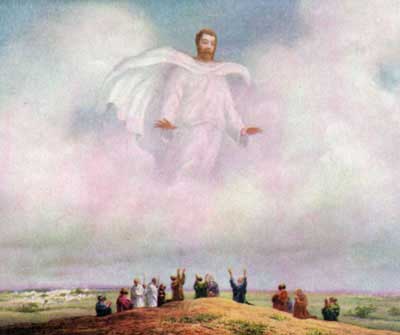 4. The resurrection of Christ has defeated death, the final consequence of sin, and has transformed physical death into a bridge to a higher state of heavenly existence for the believers. Without the resurrection, the ultimate end of man is nothing more than a shovel full of dirt over a dead body. The believers, who walk with Christ on earth, will be resurrected in the glory of Christ in glorified bodies not subject to death and corruption to experience fully his regenerative and deifying grace and life (1 Corinthians 15: 35-36). That is why they do not fear martyrdom and death. The unbelievers will be resurrected merely as creatures of the almighty creator to experience his eternal judgment. The resurrection of Christ is the triumph of life over death. It is the chief guarantee of our own resurrection from the dead: “But now Christ is risen from the dead, and has become the firstfruits of those who have fallen asleep. For as in Adam all die, even so in Christ all shall be made alive” (1 Corinthians 15: 20, 22); “And if Christ is not risen, your faith is futile; you are still in your sins” (1 Corinthians 15: 17). In addition, by raising Jesus from the dead, God has declared that he has accepted Jesus’ atoning sacrifice on the cross, and confirmed his claims of divinity. The resurrection of Christ is the supreme vindication of his divine identity (Romans 1: 4).
The resurrection of Christ transformed and reversed the lives of his disciples. They had fled at his arrest and trial fearing for their lives (John 20: 19). However, they were willing to die for proclaiming Christ, the risen Lord, after his resurrection and seeing him and talking with him in multiple appearances. For instance, Peter had denied him three times before maids and others. However, after his resurrection, he was completely transformed. He preached the Gospel of Christ with power and boldness to thousands of people not fearing for his life, and as a result, about three thousand accepted Christ in one day (Acts 2: 41). Jesus also appeared to those that did not believe in him, resulting in conversions of some of them (e.g. Paul, James, etc.--1 Corinthians 15: 7-8). Both Paul and James were martyred for proclaiming the gospel of Christ.
5. By following the teachings of Christ and imitating his exemplary virtuous holy life on earth in fellowship with him, the believer is united with Christ. The atoning sacrifice of Christ on the cross is the supreme example of self-sacrificing love. It reveals the love of God for sinners, and the obedience of Jesus to the will of God the Father (Luke 22: 42). This elicits a loving response of repentance from sinners:
Thus, Christ has completed the work needed for the restoration and salvation of humanity, and has offered it freely to everyone: “He who believes in the Son (Christ) has everlasting life; and he who does not believe the Son shall not see life, but the wrath of God abides on him” (John 3: 36); “Nor is there salvation in any other, for there is no other name under heaven given among men by which we must be saved” (Acts 4: 12).
III. WHY IS ATONEMENT FOR SIN REQUIRED?
(return to list of contents)
Repentance alone is insufficient to obtain God’s forgiveness. Suppose we have a law against theft providing a specific penalty for the thief, but the penalty is not administered. This would have the effect of voiding that law which becomes useless. The sovereign God does not arbitrarily forgive sins without a just basis for his forgiveness. God’s justice must be satisfied. God’s forgiveness requires atoning sacrifice accompanied by true repentance, because forgiveness without punishment would have the effect of voiding the moral law of God, resulting in moral anarchy. God’s moral government of the universe could not be maintained if transgressions are not punished: “The wages of sin is death” (Romans 6: 23a); “The soul who sins shall die” (Ezekiel 18: 4b, 20a). The moral harmony of the universe will be impaired if evildoers do not receive their just punishment. A justice exercised unmercifully fails to express the love of God. A mercy exercised unjustly undermines the moral order.
Christianity teaches that any human sin is an infinite offense against the infinite God and must be judged with infinite punishment. Good works (acts of obedience to God) are earthly and limited, and required of man. They are not a favor man offers to God. They are not good enough to pay for man’s sins. They do not satisfy the justice of God. Therefore, the concept of a judgment scale that weighs the good deeds of the person against his evil deeds is meaningless and not valid. If God’s judgment were based on his justice alone, no one could be saved eternally (Romans 3: 10). Good works no more cover and compensate for bad works than an act of kindness can take away the guilt of a murderer. Many good works mixed with bad works is like an omelet that contains both good and bad eggs. No one could eat this omelet. No one would accept a glass of water if a drop of ink is added to it. Dirty hands cannot clean themselves. Good deeds do not compensate for bad deeds. Good deeds do not erase bad deeds neither in human laws nor in God’s laws. Man could not undo sins he did in the past.
A law determines what is right and wrong, but could not transform and purify the person internally and make him right. It is simply the standard by which the person shall be judged (Galatians 5: 4). The all-holy God does not accept a life stained with sin. Good works do not earn salvation. They do not cure the person from the sin sickness. They do not result in internal transformation and purification of the fallen human nature. Good deeds, on their own merit, are incapable of bridging the huge gulf that separates fallen humanity from the divine God, and therefore, they could not establish communion between God and the human person: “I do not set aside the grace of God; for if righteousness comes through the law, then Christ died in vain” (Galatians 2: 21). “We are all like an unclean thing, and all our righteousnesses are like filthy rags. We all fade as a leaf, and our iniquities, like the wind, have taken us away” (Isaiah 64: 6). “…by the works of the law no flesh shall be justified” (Galatians 2: 16). “Whoever shall keep the whole law, and yet stumble in one point, he is guilty of all” (James 2: 10).
If a man cannot pay his huge debts, the judge rules that he should be incarcerated till he pays his debts. However, the judge has compassion and love toward this man because he is his son. Therefore, he takes off his black robe of the courtroom, and goes and pays the entire debt of this man who accepts his merciful deed with gratitude. Because his debts are now fully paid and justice is satisfied, he is set free from prison.
Christ suffered on our behalf, and paid the infinite penalty of our sins when he died on the cross taking our place to satisfy the justice of God. It is as if each penitent person had died for his own sins: “Who gave Himself a ransom for all” (1 Timothy 2: 6a; Mark 10: 45; 1 Peter 3: 18); “But if we walk in the light as He is in the light, we have fellowship with one another, and the blood of Jesus Christ His Son cleanses us from all sin” (1 John 1: 7); “Much more then, having now been justified by His (Christ’s) blood, we shall be saved from wrath through Him” (Romans 5: 9). Christ is the atoning sacrifice for our sins who has reconciled the divine-human relationship. Christ’s atoning death removes the barrier to divine forgiveness by assuming the infinite punishment for men. By his stripes we are healed from the sickness of sin, and receive the remission of sins. Forgiveness is the healing of a broken relationship between God in Christ and the penitent sinner. It is a costly forgiveness that requires the atonement of Christ on the cross. If the sinner repents and accepts the atonement of Christ with genuine faith, his sin is transferred to the account of Christ who took its just punishment on the cross.
The atonement is the work of perfect divine love with which Christ laid down his life for the salvation of humanity (John 13: 1; 15: 13). The atoning sacrifice of Christ on the cross cleanses the conscience of the human person from sin and its defilement. “How much more shall the blood of Christ, who through the eternal Spirit offered Himself without spot to God, cleanse your conscience from dead works to serve the living God?” (Hebrews 9: 14; 1 John 1: 7).
IV. THE APPROPRIATION OF THE FREE GIFT OF ATONEMENT
(return to list of contents)
In the human experience, if a gift is offered to a person, he will not enjoy its benefits unless he accepts it, and takes it as his cherished possession. If he rejects it, he will not benefit from it, because it will remain with the one who offered it. Likewise, in order to enjoy the benefits of the free gift of the redemption provided by Christ: “being justified freely by His grace through the redemption that is in Christ Jesus” (Romans 3: 24), the person is to accept it first. To be saved, the person must first admit his sinful alienation from God, and the fact that he is unable to make himself right with God by his own self-effort. He should then accept Christ’s atoning sacrifice on his behalf, and submit his life to the lordship of Christ. Accepting the free gift of the atoning redemption of Christ is by means of penitent faith in Christ as the personal Lord and Savior/Redeemer. Repentance alone does not transform the corrupt human nature. Through penitent faith, man gives himself up to Christ, who transforms and sanctifies him progressively through the Holy Spirit: “Behold, I stand at the door (of your heart) and knock, if anyone hears My voice and opens the door, I will come in to him and dine with him, and he with Me” (Revelation 3: 20), “To Him all the prophets witness that, through His name, whoever believes in Him will receive remission of sins” (Acts 10: 43). The door of the human heart is locked from inside. Therefore, the person must respond to the knock of Christ from within. It is the empowerment of the grace of God through his Holy Spirit that enables the person to open the door of his heart to let the uncreated divine light in to illuminate the darkness of his life.
Although God wants everyone to be saved: “who desires all men to be saved and to come to the knowledge of the truth” (1 Timothy 2: 4), and grow in communion with him, he does not force or compel anyone against his free will to accept the free gift of redemption: “The one who comes to Me I will by no means cast out” (John 6: 37b). Doing so is not consistent with his divine nature. Divine grace and human free will work and cooperate together harmoniously in the appropriation of the gift of atonement for each person. Divine grace begins the work of salvation in the person by inviting him and urging him through the Holy Spirit of the living God to accept the atoning sacrifice of Christ by “faith working through love” (Galatians 5: 6b); “we are God’s fellow workers” (1 Corinthians 3: 9a); “For by grace you have been saved through faith, and that not of yourselves; it is the gift of God” (Ephesians 2: 8); “He who believes in the Son has everlasting life; and he who does not believe the Son shall not see life, but the wrath of God abides on him” (John 3: 36); “Much more then, having now been justified by His blood, we shall be saved from wrath through Him” (Romans 5: 9). This process of accepting the free gift of the atonement of Christ by penitent faith culminates in baptism, whereby the Holy Spirit unites the person with Christ, justifies him, and begins the process of his renewal.
V. ILLUSTRATIONS OF SUBSTITUTIONARY SACRIFICES
(return to list of contents)
The atoning sacrifice of Christ is foretold and prefigured in the Old Testament (the Torah, etc), and is explained and taught in the New Testament (Injil, etc).
1. The Sacrifice of Abraham’s Son
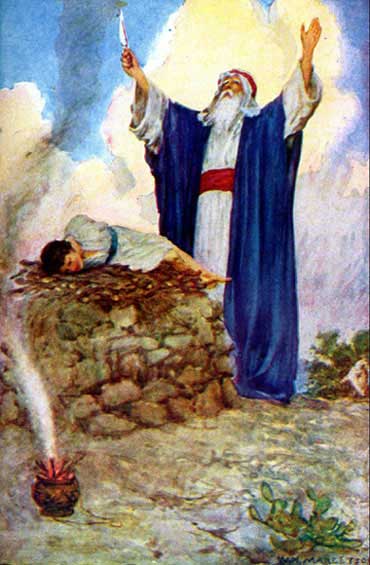
Testing the faith of Abraham, God asked him almost 2000 years before Christ, to offer his son as a sacrifice to please God on a mountain: “Then He said, ‘take now your son, your only son Isaac, whom you love, and go to the land of Moriah, and offer him there as a burnt offering on one of the mountains of which I shall tell you” (Genesis 22: 2). The offering of Abraham’s son typified the offering of Christ, the only son of God the Father, to save humankind. About 2000 years after God had asked Abraham to sacrifice his son on Mount Moriah, God sacrificed his own Son, Christ, who was crucified on the same Mount Moriah. In fact, Abraham’s son carrying the wood of the burnt offering to the place of the sacrifice prefigures Christ carrying the wood of his cross up to the place of crucifixion: “So Abraham took the wood of the burnt offering and laid it on Isaac his son; and he took the fire in his hand, and a knife, and the two of them went together” (Genesis 22: 6); “And He (Jesus Christ), bearing His cross, went out to a place called the Place of a Skull, which is called in Hebrew, Golgotha” (John 19: 17). As commanded by the angel of the Lord, Abraham freed his son and offered a ram as a substitutionary sacrifice in his place to redeem him. As Isaac, Abraham’s son, came out of this alive, Christ was raised from the dead and came back alive.
2. The Paschal Lamb
The Israelites were enslaved in the land of Egypt for 430 years (Exodus 12: 40-41). God wanted to free them from the oppression of the pharaoh of Egypt (Exodus 3: 9-10). The pharaoh refused to let them leave Egypt because they provided him with cheap labor (Exodus 5: 1-9). Therefore, God struck the land of Egypt ten times, the last of which was killing the firstborn throughout the land of Egypt (Exodus 11: 4-7). In order to protect the firstborn of the Israelites, God commanded them through Moses that each household should sacrifice a lamb (the first Passover lamb) in the place of the firstborn to redeem them, “And they shall take some of the blood (of the lamb) and put it on the two doorposts and on the lintel of the houses where they eat it. For I will pass through the land of Egypt on that night, and will strike all the firstborn in the land of Egypt, both man and beast; and against all the gods of Egypt I will execute judgment: I am the Lord. Now the blood shall be a sign for you on the houses where you are. And when I see the blood, I will pass over you; and the plague shall not be on you to destroy you when I strike the land of Egypt” (Exodus 12: 7, 12-13; 13: 13). As a result of killing the firstborn, the pharaoh let the Israelites go (Exodus 12: 31-36) more than 1400 years before Christ. They passed from slavery to freedom through the sea of reeds (Exodus 14). This foretells the passage from the bondage of sin into the kingdom of God through the waters of baptism.
The Passover lamb pointed to Christ who died on the cross on the day when the paschal lambs were sacrificed. “Behold! The Lamb of God who takes away the sin of the world” (John 1: 29b). Placing some of the blood of the Passover lamb, which was without blemish, on the doorposts and lintels of the houses of the Israelites illustrates the fact that the atoning sacrifice of Christ, who was without sin, must be willfully accepted and appropriated by the person through penitent faith that he may be saved. As the blood of the sacrificial Passover lamb protected from temporal destruction and death, the blood of Christ, our Passover lamb, saves those that accept Christ by penitent faith as their personal Lord and Redeemer from eternal destruction and separation from God: “For indeed Christ our Passover, was sacrificed for us” (1 Corinthians 5: 7b); “How much more shall the blood of Christ, who through the eternal Spirit offered Himself without spot to God, cleanse your conscience from dead works to serve the living God” ( Hebrews 9: 14).
3. The Animal Sacrificial System in the Torah
“And according to the law almost all things are purified with blood, and without shedding of blood there in no remission” (Hebrews 9: 22); “For the life of the flesh is in the blood, and I have given it to you upon the altar to make atonement for your souls; for it is the blood that makes atonement for the soul” (Leviticus 17: 11). A guiltless animal was sacrificed to atone for sins by taking the punishment of the sinner. This symbolized Christ taking the punishment of the penitent sinner. The sinner “shall put his hand on the head of the burnt offering, and it will be accepted on his behalf to make atonement for him” (Leviticus 1: 4). This signified the sinner’s acceptance of, and identification with, the offered sacrifice, as the penitent faith of the believer identifies him with Christ who died as his sin offering. The blood of the animal signified that its life was poured out sacrificially for the offerer. That is, its life was offered as a substitution for the life of the penitent guilty offerer, thereby saving him from the punishment of death for his sins. As a result, the sinner who offered the animal sacrifice, on the hope of the future all-sufficient atonement of Christ, continued to live: “For if the blood of bulls and goats and the ashes of a heifer, sprinkling the unclean, sanctifies for the purifying of the flesh, how much more shall the blood of Christ, who through the eternal Spirit offered Himself without spot to God, cleanse your conscience from dead works to serve the living God?” (Hebrews 9: 13-14). The first man who had offered an acceptable animal sacrifice to God was Abel who “brought of the firstborn of his flock and of their fat” (Genesis 4: 4a).
The system of offerings was codified in the law that God gave Moses. Leviticus 1-7 speaks about five main types of offerings. Those offerings typify and prefigure various aspects of Christ’s offering of himself as a substitutionary sacrifice of atonement on behalf of penitent believers: “And walk in love, as Christ also has loved us and given himself for us, an offering and a sacrifice to God for a sweet-smelling aroma” (Ephesians 5: 2); “So Christ was offered once to bear the sins of many” (Hebrews 9: 28a). Christ is “The Lamb of God who takes away the sin of the world” (John 1: 29b). These five types of offerings fall into two main categories. The first category reminds us that the sacrificial work of Christ on the cross on our behalf is completely acceptable to God the Father as a satisfaction for the sins and guilt of the world. The second category is those offerings that reflect the benefit of Christ’s sacrifice for those that accept it.
God does not change. He is the same from eternity’s past to eternity’s future. Those symbolic offerings, which were continually offered through the years, have all been fulfilled in Christ’s offering of himself as atonement in our behalf.
4. Examples from the Created World
When Jesus was explaining to his disciples his imminent death, he said: “Unless a grain of wheat falls into the ground and dies, it remains alone; but if it dies, it produces much grain” (John 12: 24). In producing a new plant, the seed’s existence as an individual ends. As a result, a new life springs out of the earth producing much fruit in its due season.
When a bee stings someone attacking its hive, it dies right afterwards as it loses its entrails in the process. It dies in order to save others in its hive. There are many examples in the animal kingdom on sacrificing self in order to save others in the group, especially young ones. In fact, this is an honorable universal practice. Good people die in defense of the innocent. Soldiers die in defense of their country. This is what Jesus freely did. “For scarcely for a righteous man will one die; yet perhaps for a good man someone would even dare to die. But God demonstrates His own love toward us, in that while we were still sinners, Christ died for us” (Romans 5: 7-8).
VI. CHRIST’S VICARIOUS SACRIFICE
(return to list of contents)
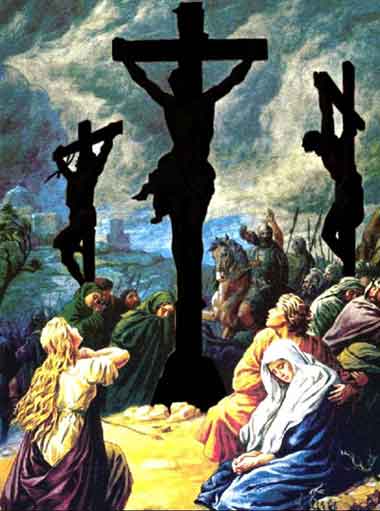
The unlimited divine love of God to humanity, his creation, requires mercy for the penitent sinner: “In this is love, not that we loved God, but that He loved us and sent His Son to be the propitiation for our sins” (1 John 4: 10; John 3: 16). On the other hand, the unlimited divine holiness of God requires justice and punishment for sin. Christ’s sacrificial death on the cross has reconciled God’s justice with his mercy, because Christ has satisfied the justice of God when he received on our behalf our just punishment that we, the transgressors, deserve for our transgressions. This has allowed the mercy of God to be bestowed upon the penitent believing sinners. “But God demonstrates His own love toward us, in that while we were still sinners, Christ died for us” (Romans 5: 8). In Christ, God reconciles humanity to himself, and restores man’s fellowship with him after man’s condemnation has been removed: “Now all things are of God, who has reconciled us to Himself through Jesus Christ, and has given us the ministry of reconciliation. That is, that God was in Christ reconciling the world to Himself, not imputing their trespasses to them” (2 Corinthians 5: 18-19a); “For Christ also suffered once for sins, the just for the unjust, that He might bring us to God” (1 Peter 3: 18a). The atoning death of Christ on the cross is an expression of the intra-Trinitarian divine love that has eternally existed in the godhead.
God had promised thousands of years before Christ that the seed of the woman (Christ) will crush the head of the serpent (Satan) [Genesis 3: 15]. The atoning sacrifice of Christ on the cross has fulfilled that promise: “For this purpose the Son of God was manifested, that He might destroy the works of the devil” (1 John 3: 8b); “The God of peace will crush Satan under your feet shortly” (Romans 16: 20a). When Jesus died on the cross, the veil/curtain of the Most Holy Place of the Jewish temple in Jerusalem was torn from top to bottom (Matthew 27: 51), signifying clearly that the atoning sacrifice of Christ removed the barrier between God and redeemed man, which prevented man from entering the Most Holy Place of the temple, where the presence of God was manifested: “we have confidence to enter the Most Holy Place by the blood of Jesus” (Hebrews 10: 19).
About seven centuries before Christ, the prophet Isaiah prophesied about the sacrifice of Christ on our behalf:
“Surely He has borne our griefs and carried our sorrows; yet we esteemed him stricken, smitten by God and afflicted. But He was wounded for our transgressions. He was bruised for our inequities. The chastisement for our peace was upon Him. And by His stripes we were healed. All we like sheep have gone astray. We have turned, every one, to his own way. And the Lord has laid on Him the iniquity of us all. He was oppressed and He was afflicted. Yet He opened not His mouth. He was led as a lamb to the slaughter, and as a sheep before its shearers is silent. So He opened not his mouth. He was taken from prison and from judgment, and who will declare His generation? For He was cut off from the land of the living. For the transgressions of my people He was stricken. And they made His grave with the wicked—but with the rich at His death, because He had done no violence, nor was any deceit in His mouth” (Isaiah 53: 4-9).
Although it was within his authority and power to reject the cross, Christ, the eternal judge in judgment day, has freely chosen to offer himself on the cross voluntarily by his free will to redeem humanity from the bondage of its sinful condition. He declared that he came “…to give His life a ransom for many” (Matthew 20: 28; 26: 28; John 6: 51; 10: 11, 15; Mark 10: 45; 14: 24). In fact, when they came to arrest him, he first manifested his divine power by preventing them from approaching him: "Jesus therefore, knowing all things that would come upon Him, went forward and said to them, “Whom are you seeking?” They answered Him, “Jesus of Nazareth.” Jesus said to them, “I am He.” And Judas, who betrayed Him, also stood with them. Now when He said to them, “I am He,” they drew back and fell to the ground" (John 18: 4-6). Afterwards, he chose to withhold his divine power, and allowed them to approach him. At this point, “one of those who were with Jesus stretched out his hand and drew his sword, struck the servant of the high priest, and cut off his ear. But Jesus said to him, "Put your sword in its place, for all who take the sword will perish by the sword. Or do you think that I cannot now pray to My Father, and He will provide Me with more than twelve legions of angels? How then could the Scriptures be fulfilled, that it must happen thus?” (Matthew 26: 51-54). Jesus chose not to call an army of 72,000 angels to manifest his divine glory, and to destroy the crowd that came to arrest him. He took upon himself our punishment that we rightfully deserve for our sins and transgressions because “having loved His own who were in the world. He loved them to the end” (John 13: 1b); “Greater love has no one than this, than to lay down one’s life for his friends” (John 15: 13); “Therefore, My Father loves Me because I lay down My life that I may take it again. No one takes it from Me, but I lay it down of Myself. I have power to lay it down, and I have power to take it again” (John 10: 17-18b); “For He made Him who knew no sin to be sin for us, that we might become the righteousness of God in Him” (2 Corinthians 5: 21); “who (Christ) Himself bore our sins in His own body on the tree, that we, having died to sins, might live for righteousness--by whose stripes you were healed” (1 Peter 2: 24). Jesus was offered strongly spiced wine mixed with gall (an anesthetic) before his crucifixion to dull the pain. He refused to drink it (Matthew 27: 34), as he wanted to be fully conscious till his agonizing death.
Sin is an offence committed against God. An offence is measured by the stature of the one offended. An offence committed against an earthly king is much more serious, and gets a severer punishment, than an offence committed against a poor unknown man. Likewise, an offence against the infinite omnipotent eternal God of the universe is an infinite offence that requires infinite punishment because it insults the infinite external honor of God, which is reflected in the integrity and wholeness of creation as God intended it to be. Sin distorts and disrupts the created order. Therefore, a finite creature could not provide satisfaction for sins committed in disobedience to the infinite God. Infinite satisfaction and atonement could be provided only by one infinite in majesty, who is truly infinite God and truly human in order to represent the human race (Isaiah 43: 11).
Three conditions qualified Christ to be the acceptable sacrifice that redeems humanity:
(1) his sinlessness, born free from the original sin (the fallen nature) because he was born of the Holy Spirit of the living God, not from the seed of man. The Holy Spirit prevented the transmission of corruption (Luke 1: 35). “but was in all points tempted as we are, yet without sin” (Hebrews 4: 15b; 7: 26; 1 Peter 2: 22; 2 Corinthians 5: 21; 1 John 3: 5),
(2) his full humanity identifying him with the human race, and
(3) his full deity as the Son of God who is capable of offering infinite satisfaction and atonement in order to create the conditions through which humanity might be saved and regenerated. Due to his divine sonship, his sacrifice has infinite value, making it all-sufficient on behalf of humanity of all times (1 John 2: 2).
However, the subject of humiliation, suffering and death in Christ was his human nature, which is united with his divine nature without confusion. The divine nature was not affected by the suffering and death of Christ. Christ is passible (able to suffer and die) in his human nature, and impassible (incapable of, and not susceptible to, suffering and death) with respect to his divine nature. This is similar to deforming a red hot iron rod by hammering it. While the iron rod, which corresponds to the human nature, suffers deformation, the fire within the iron rod, which corresponds to the divine nature, is not affected and remains unharmed by the hammering. It is also similar to an empty glass vase merely full of air. The vase represents the human nature. The air represents the divine nature. The air inside the vase has shape. However, it is identical with the air outside the vase. If we smash the vase against the wall into thousand pieces, nothing happens to its air except lose its shape.
It may be hard for some to accept the mystery that the Lord God of all creation condescends to assume the role of a servant. In fact, God is the Provider. He cares for humankind and animals. In his providential capacity, God is a servant who serves his creatures rather than receives service from them (Acts 17: 25). No creature can take over the work of the divine providence. Although God cares for his creation without its help, he grants his chosen angelic and human servants the privilege of working together with him (2 Corinthians 1: 6). Just as creation and providence belong to God, salvation and redemption of his creation from its present corruption also belong to him (Psalm 3: 8; Isaiah 47: 2-22; James 4: 12). The Word (Son) of God is involved in the creation and sustenance of the world as much as its salvation (John 1: 3; 3: 16; Hebrews 1: 3). Christ was the suffering servant. “For even the Son of Man (Christ) did not come to be served, but to serve, and to give His life a ransom for many” (Mark 10: 45). Christ is God’s servant, and God’s chosen eternal King (Philippians 2: 6-11). He brings glory to God, and is himself glorified by God.
Christ’s atonement is offered, and is all-sufficient for all humanity of all times: “Who gave Himself a ransom for all” (1 Timothy 2: 6a); “so Christ was offered once to bear the sins of many. To those who eagerly wait for Him He will appear a second time, apart from sin, for salvation. By that will we have been sanctified through the offering of the body of Jesus Christ once for all. But this Man, after He had offered one sacrifice for sins forever, sat down at the right hand of God” (Hebrews 9: 28; 7: 24-28; 10: 10, 12; Revelation 1: 5). However, it is efficacious only for those who respond positively to it and accept it by penitent working faith in Christ: “For God so loved the world that He gave His only begotten Son, that whoever believes in Him should not perish but have everlasting life” (John 3: 16).
God initiated the old covenant of the law with humanity through Moses: “And Moses took the blood (of animal sacrifices), sprinkled it on the people, and said, ‘this is the blood of the covenant which the Lord has made with you according to all these words” (Exodus 24: 8); “Now therefore, if you will indeed obey My voice and keep My covenant, then you shall be a special treasure to Me above all people; for all the earth is Mine” (Exodus 19: 5). Just as the animal sacrifice offered by Moses in Sinai ratified the old covenant, Christ’s vicarious sacrifice inaugurated the new covenant of grace between God and humanity, which was prophesied by the prophet Jeremiah about 600 years before Christ: “But this is the covenant that I will make with the house of Israel (symbolizes the Church) after those days, says the Lord: I will put My law in their minds, and write it on their hearts; and I will be their God, and they shall be My people” (Jeremiah 31: 33; Hebrews 8: 7-13); “I will give you a new heart and put a new spirit within you; I will take the heart of stone out of your flesh and give you a heart of flesh. I will put My Spirit within you and cause you to walk in My statutes, and you will keep My judgments and do them” (Ezekiel 36: 26-27); “For the law was given through Moses, but grace and truth came through Jesus Christ” (John 1: 17); “Then He (Christ) took the cup, and gave thanks, and gave it to them saying, ‘drink from it all of you, for this is My blood of the new covenant, which is shed for many for the remission of sins. But I say to you, I will not drink of this fruit of the vine from now on until that day when I drink it new with you in My Father’s kingdom” (Matthew 26: 27-29; Hebrews 9: 15-22; etc.).
In the new covenant, the believer receives the Holy Spirit of the living God, who strengthens him in the faith of Christ, and progressively sanctifies him as he lives in fellowship with Christ: “And it shall come to pass in the last days, says God, that I will pour out of My Spirit on all flesh. Your sons and your daughters shall prophesy. Your young men shall see visions. Your old men shall dream dreams. And on My menservants and on My maidservants I will pour out My Spirit in those days; and they shall prophesy” (Acts 2: 17-18; Joel 2: 28-29); “Clearly you are an epistle of Christ, ministered by us, written not with ink but by the Spirit of the living God, not on tablets of stone but on tablets of flesh, that is, of the heart” (2 Corinthians 3: 3).
VII. HISTORICAL EVIDENCE FOR THE CRUCIFIXION OF JESUS OF NAZARETH
(return to list of contents)
The Old Testament of the Holy Bible (Torah, etc.) contained prophecies about the death of Christ (Isaiah 53: 5-10; Psalm 22: 16; Daniel 9: 26; Zechariah 12: 10), and his resurrection (Psalm 16: 10; Isaiah 26: 19; Daniel 12: 2). Jesus announced many times that he was going to die and rise from the dead after three days: “…Jesus said to them, “The Son of Man (Jesus) is about to be betrayed into the hands of men, and they will kill Him, and the third day He will be raised up.” And they were exceedingly sorrowful” (Matthew 17: 22-23; 12: 40; John 2: 19-21; 10: 10-11; Mark 8: 31). In addition, early Christian writers, such as Polycarp (70-156 AD), Ignatius (30-107 AD), Justin Martyr (d. 165 AD), etc., affirmed his death and resurrection.
The four gospels clearly narrate the historical events of the crucifixion of Jesus of Nazareth. They tell us that the crucifixion of Jesus was a public event witnessed by believers and unbelievers alike. The apostle John was standing by the cross (John 19: 26). In addition, other followers of Christ were at the cross including his mother Mary (John 19: 26-27), and other women (Luke 23: 27; John 19: 25). The Roman soldiers charged to execute his crucifixion witnessed it. Other witnesses of his crucifixion were the two thieves on adjacent crosses (Matthew 27: 38), a great multitude of people (Matthew 27: 39; Luke 23: 27), and Jewish leaders (Matthew 27: 41) who hated him so much that they wanted to ascertain that he was put to death.
Jesus was subjected to cruel Roman flogging before his crucifixion (Matthew 27: 26; Mark 15: 15; John 19: 1). The Romans used a flagrum which is a whip of braided leather thongs with metal balls and pieces of sharp bones woven into them. It was designed to rip the skin off the body and cause excessive bleeding. After just a few lashes on the back, the victim’s skin began to come off in ribbons and his muscles tore. After a few more lashes, the muscles became like pulp. Arteries and veins were laid bare. Sometimes the flagrum would reach around the abdomen and the abdominal wall would give way, causing the victim’s intestines to spill out. Many people died during the flogging alone. Hanging on the cross, the crucified victim would have to use his little remaining energy to push against the spike in his feet so that he could breathe out. He could breathe in as he sagged back down, but he would have to push back up before breathing out again. When his energy was drained and he could not push up any longer, he would die of asphyxiation.
Jesus declared his death on the cross at its very moment. “When Jesus had cried out with a loud voice, He said, ‘Father, ‘into Your hands I commit My spirit.’ Having said this, He breathed His last” (Luke 23: 46; John 19: 30). This was heard by those who stood by the cross (Luke 23: 47-49). Furthermore, the Roman soldiers pronounced him dead (John 19: 33). A Roman soldier pierced Jesus’ right side with a spear that tore through his right lung and heart to ascertain his death (John 19: 34). The Roman local ruler Pilate ascertained his death before permitting his burial (Mark 15: 44-45). In fact, as far as we know, no one in history ever survived a full Roman crucifixion. The punishment of the crucifixion was so cruel and brutal that the Romans exempted their citizens from it except for cases of high treason. Christian and non-Christian scholars are virtually unanimous that the death of Jesus on the cross is one of the surest facts of history.
In addition, non-Christian and non-biblical sources of early Jewish, Roman and Samaritan origin attest the crucifixion of Christ as a historical event:
1. In his Antiquities of the Jews, Book XVIII, Chapter III, Section 3 written about 93-94 AD, the Jewish historian Flavius Josephus (37-100 AD) describes the crucifixion of Jesus under Pilate, the Roman governor at that time.
2. Cornelius Tacitus (55-120 AD), the most important Roman historian of the first century, alluded in his historical writings to the death of Christ: “Christus….was put to death by Pontius Pilate, procurator of Judea in the reign of Tiberius. But the pernicious superstition, repressed for a time, broke out again, not only through Judea where the mischief originated, but through the city of Rome also” (Roman Annals 15: 44).
3. Mara Bar-Serapion, a philosopher, wrote a letter in Syriac to his son Serapion about 74 AD mentioning Christ as “the wise king of the Jews who were justly punished for murdering him.”
4. Lucian of Samosata (125-190 A.D.), one of the most brilliant writers of Greek literature, mentioned that Christ was crucified in Palestine for having originated the cult of Christianity (Lucian, Passing of Peregrinus, 1.11.13).
5. Thallus, a Palestinian historian, wrote about 52 AD on “the darkness which accompanied the crucifixion of Christ.”
VIII. CONCLUSION
(return to list of contents)
Only the living Christ could sustain the Christian life of faith, hope and love. His living presence energizes the Christian life. Detached from the living Christ, the branch withers and the flower fades away. Redemption occurs through spiritual union with the living Christ. Christ’s suffering and death on the cross provide atonement for the sins of the believer, and reconciles the believer to God. His triumphant descent into the nether world enables the faithful to share in his victory over the demonic powers. His resurrection enables the faithful to rise from the death of sin, and to be regenerated into a new life in Christ. With his ascension, the believer is sanctified and brought into the presence of the heavenly Father. His session at the right hand of the heavenly Father, the place of highest honor and perfect blessedness, allows the believer access to the heavenly Father. This cosmic session of Christ has a transcendent reality beyond time and space. He intercedes for humanity in the presence of the Father, pleading humanity’s case before him. “…if anyone sins, we have an Advocate with the Father, Jesus Christ the righteous” (1 John 2: 1; Romans 8: 34; Hebrews 7: 25; Isaiah 53: 12). While satisfaction of divine justice is the finished work of Christ on the cross, intercession and blessing are his continuing activities in the divine presence and amid the blessed community.
The present age began with the ascension of Christ to heaven, forty days after his resurrection from the dead (Acts 1: 3, 9). Upon his ascension, he has been enthroned as the messianic king whose kingdom shall have no end (Luke 1: 32-33). He rules conjointly with the Father and the Holy Spirit in the heavenly spiritual kingdom. Christ’s immediate kingdom is not of this world. His kingly rule is manifested among the Christians who are united with him in close loving fellowship. His kingdom is present in the inner life of the believer. “For the kingdom of God is not eating and drinking, but righteousness and peace and joy in the Holy Spirit” (Romans 14: 17). His governance also pertains to the present world, the present Church, and the future of history.
Only Christianity leads to fellowship with the true living almighty God. Christ said: “…I am the way, the truth, and the life. No one comes to the Father except through me” (John 14: 6). Jesus loves you. He offered himself on a cross of shame and pain in order to save your soul from eternal darkness. He seeks you saying: “Behold, I stand at the door and knock. If anyone hears My voice and opens the door, I will come in to him and dine with him, and he with me” (Revelation 3: 20). Would you open the door of your heart for him today? If you accept him and ask him to come into your heart and life as your Lord and savior, he will transform your life from within forever. He will take you with him in an exciting journey to eternal life and the uncreated light of God. Christ has said: “…Because I live, you will live also …Peace I leave with you, My peace I give to you; not as the world gives do I give to you. Let not your heart be troubled, neither let it be afraid” (John 14: 19, 27). On the other hand, if you reject him or treat him merely as another prophet, you separate yourself from the true living God eternally, and dwell in the eternal torment of the outer darkness. You can begin your new life with Christ by praying this simple prayer that expresses your new dedication and commitment to journey with him:
My beloved Lord Jesus Christ, I accept you as the Son of God, who incarnated, was crucified, died, and was raised from the dead by God. Please, forgive my sins. I fully trust in you to save me. I invite you to come into my heart and lead my life as my personal Lord and savior. I renounce Satan and all his works. I unite myself to you, my Christ. I believe in you as my king and God. I worship the Father and the Son and the Holy Spirit, the Holy Trinity, one in essence and undivided.
In ancient times, after Moses gave the commandments of God to his people, he said to them: “I call heaven and earth as witnesses today against you, that I have set before you life and death, blessing and cursing; therefore choose life, that both you and your descendants may live” (Deuteronomy 30: 19). May the true living God guide you to choose life over death, light over darkness, spiritual regeneration over decay, liberty over oppression, love over hatred, and peace over conflict? Christ is alive in heaven, and intervenes, as the situation requires here and now on earth. Answer his call to you. Follow the living, not the dead. It is up to you.
This page provides the basics of the Christian faith. Welcome home!
This page will help you take the next step.
For additional details, please visit the following pages:
1. Christianity and Islam: Salvation.
2. Crucifixion of Christ: Islamic allegations.
3. Not the same God.
4. Jesus and Muhammad.
5. Come to Jesus.
6. Forgiveness.
May the light of truth shine in your mind and set you free? May the glory of Christ brighten your life?
