

JESUS CHRIST:
GOD’S TOTAL SELF-GIFT
“In the beginning was the Word, and the Word was with God, and the Word was God. And the Word became flesh and dwelt among us, and we beheld His glory…” (John 1: 1, 14)
I. SYNOPSIS
(return to list of contents)
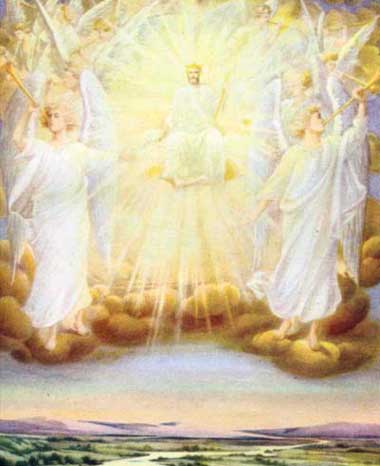
Because of the fallen depraved condition of humanity, the human person could not come to God on his own, and could not live and walk in ever closer fellowship with God: “For all have sinned and fall short of the glory of God” (Romans 3: 23). Therefore, God has chosen to come down to humanity in order to free the human person who follows him from the power and bondage of sin, deify and elevate the human person to Him: “God was, in Christ, reconciling the world to Himself” (2 Corinthians 5: 19a). In addition, God has wanted to establish a closer loving communion with His creation for “My delight was with the sons of men” (Proverbs 8: 31b).
All instruments that provide divine revelations, whether they are angels, prophets, miracles, etc., are inadequate, because they are finite. The only totally adequate revealer of God is God himself. Only God uniquely and fully knows God, and thus only he may reveal himself fully. However, the revelation of the infinite God must be expressed in terms of the finite because it is revealed to the finite. Hence, the incarnation of the Word (Son) of God is necessary for full revelation that expresses and communicates the infinite in terms of the finite. Christ has said: “All things have been delivered to Me by My Father, and no one knows the Son except the Father. Nor does anyone know the Father except the Son, and the one to whom the Son wills to reveal Him” (Matthew 11: 27; Luke 10: 22).
God is personal. Therefore, only a person can adequately reveal him. A book may tell us about God, but it is incapable of revealing the personal character of God as a person would. God has revealed His divine energies that pertain to the salvation of man fully in Jesus Christ: “And the Word (Christ) became flesh and dwelt among us, and we beheld His glory, the glory as of the only begotten of the Father, full of grace and truth. No one has seen God at any time. The only begotten Son, who is in the bosom of the Father, He has declared Him” (John 1: 14, 18). Jesus, not only preaches the word of God to humanity, but he himself is that ever living eternal Word of God. He not only does good works, but he himself is the ultimate good work of God on our behalf. He communicates the goodness of God to humanity. He is the ultimate revelation and presence of God in the world. The Word of God is God’s way of letting his divine presence become known to the world.
The eternal living Word/Wisdom of God entered the historical realm of the humankind in the time domain by His incarnation of the Virgin Mary and the Holy Spirit of the living God. The preexistent eternal living Word/Wisdom of God united with human nature in the one person of Jesus Christ, without confusion or alteration of the divine and human natures. This means that Jesus Christ, the divine-human person, is both fully divine and fully human at the same time. Therefore, he forms a bridge between the absolutely infinite God and the finite humanity, and he is uniquely qualified to be the perfect mediator between God and man (Hebrews 8: 6; 12: 24; 1 Timothy 2: 5; etc.). His humanity resembles us in everything except sin, as he was sinless: “But was in all points tempted as we are, yet without sin” (Hebrews 4: 15b). He was born of a woman (Galatians 4: 4), and had a human body that grew (Luke 2: 52). He was subject to hunger (Luke 4: 2), thirst (John 19: 28), fatigue (John 4: 6), compassion (Luke 19: 41), suffering on the cross, and physical death (Luke 23: 46) in his human nature which is united with his divine nature without confusion. The divine nature was not affected by these things. The prayer of Christ in his incarnate state to God the Father is an expression of his human nature.
The incarnation of the eternal Word (Son) of God at a specific time and place did not reduce or confine him in any way. He was not limited by his human body, nor was the universe void of his presence. This is similar to God’s appearing to Moses in the burning bush without being absent from the universe (Exodus 3: 2-6; al-Qasas 28: 29-30; Taha 20: 9-14; an-Naml 27: 7-9). He has continued to be the Almighty sovereign immanent God the Son. Man did not become God. God took human nature alongside his divine nature without ceasing to be God. The union of deity and humanity is without confusion of the two natures in the one person of Christ. Deity is not diluted, nor humanity elevated. The Almighty God is able to appear in the person of Christ and personally relate to humankind without lessening or staining his divinity. “…with God all things are possible” (Matthew 19: 26). “…great is the mystery of godliness: God was manifested in the flesh …” (1 Timothy 3: 16).
God is limitless in his presence, knowledge and power. However, by his choice, he may manifest himself in a limited way in time and space for the good of humanity. Yet this self-revelation does not reduce him in any way. All revelations of God to prophets and angels involve a voluntary self-emptying of God who is otherwise beyond limit and comprehension. This is necessary in order to communicate with his creatures meaningfully within its limitations. This makes it possible for his eternal Word to be declared within the limitations of human languages and mind, and preserved in material books made by human hands.
The ultimate self-emptying took place when the Word (Son) of God emptied himself voluntarily in his incarnation from the use and expression of his eternal divine glory, and became a servant to save the world. This is clearly declared in the “Song of Christ”—a Christian hymn composed at the end of the thirties A.D.: “…have the same mindset as Christ Jesus: who, being in very nature God, did not consider equality with God something to be used to his own advantage. Rather, he made himself nothing by taking the very nature of a servant, being made in human likeness. And being found in appearance as a man, he humbled himself by becoming obedient to death—even death on a cross! Therefore God exalted him to the highest place and gave him the name that is above every name…” (Philippians 2: 5-11; 2 Corinthians 8: 9). This self-emptying and humiliation lasted from his conception to his last moment in the grave. He was condemned to death and crucified because he claimed to be God (John 10: 33). His resurrection was a divine vindication of his identity. “Concerning His Son Jesus Christ our Lord, who was born of the seed of David according to the flesh, and declared to be the Son of God with power according to the Spirit of holiness, by the resurrection from the dead” (Romans 1: 3-4). His exaltation has resumed by his resurrection and will continue eternally forever.
The subject of his humiliation is his human nature unconfusedly united with his divine nature which neither died nor was crucified. This is similar to deforming a red-hot iron rod by hammering it. While the iron rod, which corresponds to the human nature, suffers deformation, the fire within the iron rod, which corresponds to the divine nature, is not affected and remains unharmed by the hammering. It is also similar to an empty glass vase merely full of air. The vase represents the human nature. The air represents the divine nature. The air inside the vase has shape. However, it is identical with the air outside the vase. If we smash the vase against the wall into thousand pieces, nothing happens to its air except lose its shape.
While lying in the cradle and dying on the cross, Christ did not cease to be the One in whom the fullness of the Godhead was dwelling (Colossians 2: 9), and in whom all things hold together (Colossians 1: 17). The withholding of some divine functions did not mean the loss of divine nature. The divine attributes of holiness, love, mercy and justice are exercised during his earthly ministry. But the exercise of the divine attributes of unlimited power, knowledge and presence is restrained. Christ exercised them only when needed to support his redemptive messianic mission. The mission of the Son of God (Christ) in his first advent required partially obscuring and limiting the exercise of some of his divine attributes temporarily so that his mission might be fully accomplished through suffering and death (Philippians 2: 5-8).
The union of the human and divine natures without confusion in the one person of Christ is a mystery without perfect analogy in the visible creation (Colossians 2: 2). The one imperfect analogy that comes closest to it is the union of the human soul with the human body to form one human person. Each of the divine and human natures performs the functions appropriate to it in communion with the other. Each nature communicates its properties in the one person of Christ. The communication of divine power to the human Jesus is administered by the Holy Spirit. The divine nature has shined forth in the assumed human nature of Christ and sanctified it. It adorned Jesus with extraordinary gifts sufficient for his salvific mission on earth. However, the human nature has retained its humanity after the union, as the red-hot iron remains iron after being incessantly heated with fire. A red-hot knife has two operations: cutting and burning. Although these two operations are distinguishable, they are inseparable. This is similar to the two operations of the two natures in Christ who is represented by the knife.
“In the beginning was the Word, and the Word was with God, and the Word was God. He was in the beginning with God. All things were made through Him, and without Him nothing was made that was made. In Him was life, and the life was the light of men. And the light shines in the darkness, and the darkness did not comprehend it. He was in the world, and the world was made through Him, and the world did not know Him. And the Word became flesh and dwelt among us, and we beheld His glory, the glory as of the only begotten of the Father, full of grace and truth” (John 1: 1-5, 10, 14).
As a word is begotten from the mouth, the eternal Son is begotten from the eternal Father before all ages. The sources of time are not subject to time. God transcends time. The living Word/Wisdom of God is a distinct person, not merely an utterance within the Godhead (John 1: 1). Yet, he is one being with God. The eternal Word/Wisdom of God speaks as a person:
“The Lord possessed Me at the beginning of His way, before His works of old. I have been established from everlasting, form the beginning, before there was ever an earth. When He marked out the foundations of the earth, then I was beside Him as a master craftsman. And I was daily His delight, rejoicing always before Him” (Proverbs 8: 22-23, 29b-30; 1 Corinthians 1: 24).
Jesus admitted to his disciples in private that he was the incarnate Son of God (Matthew 16: 16-20; John 4: 26). However, he chose to delay announcing his identity publicly till later in his ministry because announcing it prematurely would interfere with his main mission in his first advent, the redemption of humanity, which he accomplished on the cross. Finally, he announced his identity publicly and emphatically at his trial before the Jewish Sanhedrin (Mark 14: 62; Matthew 26: 63-64).
The Holy Bible teaches that God is spirit: “God is Spirit” (John 4: 24a). A spirit does not have the procreative sexual function which is associated with the flesh of the members of the animal kingdom. Therefore, the Sonship of Christ to God the Father is a spiritual sonship. It is a unique sonship: “All things have been delivered to Me by My Father” (Matthew 11: 27a). It is not a physical sonship of the flesh as some may erroneously think. God the Father did not take Mary for a wife and procreated Jesus form her. In fact, Mary was a virgin when Jesus was conceived in her by the power of the Holy Spirit of the living God: “And the angel answered and said to her (Mary), ‘The Holy Spirit will come upon you, and the power of the Highest will overshadow you; therefore, also, that Holy One who is to be born will be called the Son of God’” (Luke 1: 35). Christ pre-existed Mary. “Jesus said to them, “Most assuredly, I say to you, before Abraham was, I AM” (John 8: 58). “I AM” is the most ancient name of the Almighty God in the Torah (Exodus 3: 14). Jesus Christ, the Son of God, then is the personified eternal living Word/Wisdom of God the Father.
God has chosen to come down to man motivated by His unlimited divine love for His creation that surpasses human understanding, “For God so loved the world that He gave His only begotten Son, that whoever believes in Him should not perish but have everlasting life” (John 3: 16); “In this is love, not that we loved God, but that He loved us and sent His Son to be the propitiation for our sins” (1 John 4: 10).
II. THE DEITY OF JESUS CHRIST
(return to list of contents)
Christ’s deity is at the center of the Christian confession of faith since early Christianity. The oldest surviving Christian sermon, the oldest surviving account of the death of a Christian martyr, the oldest surviving pagan report about the Church, and the oldest surviving liturgical prayers (1 Corinthians 16: 22; Philippians 2: 6-11) all refer to Jesus as Lord and God. Clearly, it was the message of what the Church has believed and taught since the very beginning of the Christian era. The Christian believer is the one who has received Jesus Christ as Lord (Colossians 2: 6). This faith is articulated in the ancient Nicene Creed:
“We believe in one God, God the Father, who created heaven and earth, and all things visible and invisible. We believe in one Lord Jesus Christ, the only-begotten Son of God, begotten from the Father before all ages; light from light, true God from true God, begotten not created, of one essence with the Father, through whom all things were made; who for us and for our salvation came down from heaven, and was incarnate from the Holy Spirit and from the Virgin Mary, and became man.”
The pure sinless life, teachings, miracles, and resurrection of Jesus demonstrate that, in addition to his visible human nature, he also has a divine nature. God called Jesus Christ his eternal Son: “You are My beloved Son; in You I am well pleased” (Luke 3: 22b; 9: 35; John 4: 25-26; 11: 27; Matthew 3: 17; 17: 5; Mark 1: 11; 9: 7). His incarnation and virgin birth were the fulfillment of the Old Testament prophecies on the first advent of the Messiah: “Behold, the virgin shall be with child, and bear a Son, and they shall call His name Immanuel, which is translated, God with us” (Matthew 1: 23; Isaiah 7: 14b). The roots of the concept of Christ’s deity are traced back to the Old Testament (Torah; etc.) prophecies about the coming Messiah: “For unto us a Child is born, unto us a Son is given; and the government will be upon His shoulder. And His name will be called Wonderful, Counselor, Mighty God, Everlasting Father, Prince of Peace” (Isaiah 9: 6; Daniel 7: 13-14).
There are many arguments confirming the deity of Christ. Many of these arguments are rooted in the early Christian era.
A. The Holy Bible Affirms the Deity of Jesus Christ
1. Christ performed the works of God
(return to list of contents)
Christ performed miracles and actions that only God could do: “If I do not do the works of My Father, do not believe Me; but if I do, though you do not believe Me, believe the works, that you may know and believe that the Father is in Me, and I in Him” (John 10: 37-38; 5: 20). He had the divine powers that only the omnipotent God has. Christ performed many miracles. He healed the sick; he exorcised demons; he fed the hungry; he raised the dead; and he stilled the violent nature. Christ showed unique powers that no prophet had shown before him. Before doing some of his miracles, Jesus offered thanksgiving prayers to God the Father expressing his humanity. In all his miracles, Christ commanded the miracle in the first person using his own power. For instance, he did not say to a dead man: “I pray that God may raise you.” Instead, he said: “Lazarus, come forth” (John 11: 43b). He never used his divine power to hurt or to destroy anyone, or for his material benefit. His actions never issued in meaningless wonders or useless marvels. His miracles express and prove God’s seal of approval on his unparalleled claims pertaining to his divinity. They confirm the truth of his unique claims of his eternal Sonship to God the Father.
Christ performed his miracles publicly so that people might see them and believe. Christ worked a lot more miracles than any prophet in human history. He did his miracles easily with simple verbal commands. Based on the Gospel (Injil) information, Christ did at least 900-1000 miracles. About 15,000 people saw those miracles. In addition, approximately another 86,000 friends and family members knew the sick people before and after their healing, and could confirm that they were sick and were subsequently healed. This means that approximately one out of every twenty persons living in Palestine at that time either had seen a miracle, or knew someone who had been healed. Only a small representative proportion of the miracles of Christ is described in the Gospels. “And truly Jesus did many other signs in the presence of His disciples, which are not written in this book; but these are written that you may believe that Jesus is the Christ, the Son of God, and that believing you may have life in His name” (John 20: 30, 31; 21: 25). Here is a sampling of these actions and powers.
i. Power to create new substance.
The miracles of multiplying the few loaves of bread and fishes to feed thousands of hungry people with plenty of left-over food which they collected in baskets are miracles of creation of new substance (Luke 9: 11-17; Matthew 15: 32-39).
Jesus created two eyes for a man born blind (John 9). This man was born without eyeballs. Jesus created in him a pair of new eyeballs from clay that He anointed the blind man’s eye sockets with. This miracle reminds us of God’s creation of Adam from clay (Genesis 2:7).
ii. Power to raise the dead.
We know of three miracles of raising the dead (Luke 8: 41-42, 49-56; 7: 12-15; John 11: 1-44). The most powerful of these miracles is raising Lazarus from the dead four days after his death after his corpse began to decompose in his grave (John 11: 1-44). Jesus said: “The dead will hear the voice of the Son of God; and those who hear will live. For as the Father has life in Himself, so He has granted the Son to have life in Himself” (John 5:25b-26, 21). Only Christ raised a dead man back to life after four days in the grave. The corpse of the dead man was in a state of decomposition. No one of the prophets in the entire Bible did a similar miracle, though some raised dead persons shortly after their death (1 Kings 17: 17-24; 2 Kings 4: 18-37).
iii. Power to command nature.
Jesus rebuked the stormy wind and the raging sea, and they obeyed him (Matthew 8: 23-27; Mark 4: 36-41; Luke 8:22-25). He was able to command the forces of nature and they obeyed Him! In addition, Jesus walked on the raging sea as if it were dry land (Mark 6: 45-52).
iv. Power to lay down his life and take it back.
Jesus Christ laid down his bodily life willfully when he died on the cross. He took it back willfully when he rose from the dead: “Therefore, My Father loves Me, because I lay down My life that I may take it again. No one takes it from Me, but I lay it down of Myself. I have power to lay it down, and I have power to take it again. This command I have received from My Father” (John 10: 17-18).
The resurrection of Jesus from the dead, never to die again, is a unique event in prophetic history. It sets Jesus apart from any other prophet, as God never raised any other prophet from the dead. By raising Jesus from the dead, God has declared that he has accepted Jesus’ atoning sacrifice on the cross. In addition, the resurrection of Jesus proves that God has approved Jesus’ claim that he is the incarnate Son of God. Jesus is “declared to be the Son of God with power according to the Spirit of holiness, by the resurrection from the dead” (Romans 1: 4). The resurrection of Jesus has confirmed his claims of divinity. It is the supreme vindication of his identity.
v. Power to heal the sick.
Jesus healed many people afflicted with a variety of ailments. He healed the leper (Luke 5: 12-15; 17: 11-19), the paralytic (Luke 5: 16-26), the paralyzed (Matthew 8: 5-13), the blind (Matthew 9: 27-31), a bleeding woman (Luke 8: 43-48), and those with a variety of diseases:
“Then great multitudes came to Him, having with them the lame, blind, mute, maimed, and many others; and they laid them down at Jesus’ feet, and He healed them. So the multitude marveled when they saw the mute speaking, the maimed made whole, the lame walking, and the blind seeing; and they glorified the God of Israel” (Matthew 15: 30-31; Mark 1: 32-34; 7: 24-30, 53-56; etc.).
vi. Power over demonic powers.
Jesus set many people free from demonic powers that possessed and tormented them. Demons knew that he was the Christ, feared him, and submitted to his commands (Luke 4: 33-36, 41; 8: 26-39; Mark 9: 17-29; Matthew 8: 16, 28-34; 9: 32-33; 12: 22-23):
“Then they sailed to the country of the Gadarenes, which is opposite Galilee. And when He stepped out on the land, there met Him a certain man from the city who had demons for a long time. And he wore no clothes, nor did he live in a house but in the tombs. When he saw Jesus, he cried out, fell down before Him, and with a loud voice said, "What have I to do with You, Jesus, Son of the Most High God? I beg You, do not torment me!" For He had commanded the unclean spirit to come out of the man. For it had often seized him, and he was kept under guard, bound with chains and shackles; and he broke the bonds and was driven by the demon into the wilderness. Jesus asked him, saying, "What is your name?” And he said, "Legion," because many demons had entered him. And they begged Him that He would not command them to go out into the abyss. Now a herd of many swine was feeding there on the mountain. So they begged Him that He would permit them to enter them. And He permitted them. Then the demons went out of the man and entered the swine, and the herd ran violently down the steep place into the lake and drowned. When those who fed them saw what had happened, they fled and told it in the city and in the country. Then they went out to see what had happened, and came to Jesus, and found the man from whom the demons had departed, sitting at the feet of Jesus, clothed and in his right mind. And they were afraid” (Luke 8: 26-35)
When they accused him of casting out demons by Beelzebub, the ruler of the demons, he declared that he cast out demons by the power of the living God: “But Jesus knew their thoughts, and said to them: “Every kingdom divided against itself is brought to desolation, and every city or house divided against itself will not stand. If Satan casts out Satan, he is divided against himself. How then will his kingdom stand? And if I cast out demons by Beelzebub, by whom do your sons cast them out? Therefore they shall be your judges. But if I cast out demons by the Spirit of God, surely the kingdom of God has come upon you. Or how can one enter a strong man’s house and plunder his goods, unless he first binds the strong man? And then he will plunder his house” (Matthew 12: 25-29; Luke 11: 17-23). In fact, Jesus terrified demons. They feared that he might send them to eternal torment before the time (Matthew 8: 29).
vii. Authority to forgive sins.
Jesus performed both physical healings and spiritual healings. The latter was effected mainly by forgiving the sins of the person:
“Then behold, men brought on a bed a man who was paralyzed, whom they sought to bring in and lay before Him. And when they could not find how they might bring him in, because of the crowd, they went up on the housetop and let him down with his bed through the tiling into the midst before Jesus. When He saw their faith, He said to him, ‘Man, your sins are forgiven you.’ And the scribes and the Pharisees began to reason, saying, ‘Who is this who speaks blasphemies? Who can forgive sins but God alone?’ But when Jesus perceived their thoughts, He answered and said to them, ‘Why are you reasoning in your hearts?’ Which is easier, to say, ‘Your sins are forgiven you,’ or to say, ‘Rise up and walk?’ But that you may know that the Son of Man has power on earth to forgive sins’—He said to the man who was paralyzed, ‘I say to you, arise, take up your bed, and go to your house. Immediately he rose up before them, took up what he had been lying on, and departed to his own house, glorifying God” (Luke 5: 18-25; 7: 36-50; John 8: 1-11).
Jesus healed the paralytic man, but did that after He forgave his sins. This proved that he had the authority to forgive sins as he declared, because if he had committed blasphemy, he could not heal the paralytic man, which he did with ease.
2. The divine title is ascribed to Christ
(return to list of contents)
The Word/Wisdom of God is Christ who is God the Son: “In the beginning was the Word, and the Word was with God, and the Word was God. And the Word became flesh and dwelt among us, and we beheld His glory, the glory as of the only begotten of the Father, full of grace and truth” (John 1: 1, 14); “Great is the mystery of godliness: God was manifested in the flesh” (1 Timothy 3: 16a). The Gospel of Matthew teaches that Christ is “Immanuel, which is translated, ‘God with us’” (Matthew 1: 23b). Christ is the only begotten Son of God: “No one has seen God at any time. The only begotten Son, who is in the bosom of the Father, He has declared Him” (John 1: 18; Matthew 14: 33). He is the Lord of glory (James 2: 1). He is the King of kings and Lord of lords (Revelations 19: 16). He is the Son of God “whom He has appointed heir of all things, through whom also He made the worlds; who being the brightness of His glory and the express image of His person, and upholding all things by the word of His power” (Hebrews 1: 2b-3a). God the Father calls him God: “Your throne, O God, is forever and ever (Hebrews 1: 8a). He bestows upon him his very own name (John 17: 11-12; 8: 24, 28, 58-59; Matthew 17: 1-5; 16: 13-19). Jesus spoke of God as his Father over a hundred times in the Gospel of John.
Jesus never protested when the terms of God were ascribed to him. The apostle Thomas and other disciples called him God and worshiped him: “My Lord and my God” (John 20: 28b; Titus 2: 13; Matthew 28:9; 16: 15-17; Romans 9: 5; 2 Peter 1: 1). Christ said: “Believe Me that I am in the Father and the Father in Me, or else believe Me for the sake of the works themselves” (John 14: 11, 9); “I and My Father are one” (John 10: 30); “That all should honor the Son just as they honor the Father. He who does not honor the Son does not honor the Father who sent Him” (John 5: 23). The Jews understood his claims to deity, and sought to kill him (John 5: 18; 10: 31-33; 19: 7). When the Jewish high priest asked Jesus whether he is the Christ, the Son of God, Jesus answered in the affirmative. The high priest then accused him of blasphemy, because the title “Son of God” was understood as identifying with God, and being equal with God the Father in divinity (Matthew 26: 63-65; Mark 14: 61-64; John 10: 25-39).
3. The divine attributes intrinsic to God alone are ascribed to Christ
(return to list of contents)
Attributes that could be ascribed only to God, are ascribed to Jesus Christ: “For in Him dwells all the fullness of the Godhead bodily” (Colossians 2: 9). “…Christ came, who is over all, the eternally blessed God. Amen” (Romans 9: 5; 1 John 5: 20; Mark 9: 7; Matthew 17: 5, etc.). The following are main highlights of these attributes.
1. Pre-existent in eternity:
“Jesus said to them, "Most assuredly, I say to you, Before Abraham was, I AM” (John 8: 58); “And now, O Father, glorify Me together with Yourself, with the glory which I had with You before the world was” (John 17: 5; 1: 1); “He is before all things” (Colossians 1: 17a); “I (Christ) am the Alpha and the Omega, the Beginning and the End, the First and the Last” (Revelations 22: 13; 1: 8; 21: 6; Micah 5: 2; Proverbs 8: 23; etc.).2. Uncreated being and agent of creation:
“He (Christ) is the image of the invisible God, the firstborn over all creation. For by Him all things were created that are in heaven and that are on earth, visible and invisible, …” (Colossians 1: 15-19; John 1: 1-4; Hebrews 1: 3; Micah 5: 2; 1 Timothy 1: 17). The pre-incarnate Christ is the agent of original creation. “(God) has in these last days spoken to us by His Son, whom He has appointed heir of all things, through whom also He made the worlds” (Hebrews 1: 2; 1 Corinthians 8: 6).3. Immutable being:
“Jesus Christ is the same yesterday, today, and forever” (Hebrews 13: 8).4. Omnipotence:
The miracles of Jesus attest his unsurpassable power (Matthew 28: 18; John 5: 21; Philippians 3: 21; Colossians 1: 16; Hebrews 1:3).5. Omniscience:
Jesus knew the mind and heart of the human person: “Come, see a man who told me all things that I ever did. Could this be the Christ?” (John 4: 29; Acts 1: 24); “For Jesus knew from the beginning who they were who did not believe, and who would betray Him” (John 6: 64b; 2: 25; 11: 11-14; Luke 6: 8a; etc.). He is the One who searches the minds and hearts (Revelations 2: 23).6. Omnipresence:
The eternal Son of God exists everywhere: “No one has ascended to heaven but He who came down from heaven, that is, the Son of Man (Christ) who is in heaven” (John 3: 13). He promised: “I am with you always, even to the end of the age” (Matthew 28: 20b), and “Where two or three are gathered together in My name, I am there in the midst of them” (Matthew 18: 20).7. Sovereignty:
God the Father has given Jesus all authority, including raising and judging the dead: “And Jesus came and spoke to them, saying, all authority has been given to Me in heaven and on earth” (Matthew 28: 18; 11: 28; John 3: 35; 13: 3; Hebrews 1: 2; etc.); “For the Father judges no one, but has committed all judgment to the Son (Christ)” (John 5: 22, 28-29; Matthew 7: 21-23); “…the Lord Jesus Christ, who will judge the living and the dead at His appearing and His kingdom” (2 Timothy 4: 1; Acts 10: 42; 17: 31). He is the ruler of the kings of the earth: “Angels and authorities and powers having been made subject to Him” (1 Peter 3: 22b; Revelations 1: 5). He is Lord of lords and King of kings (Revelations 17: 14; 19: 16), and the Lord of the Sabbath (Mark 2: 28).8. Holiness of Jesus:
He is “holy, harmless, undefiled, separate from sinners, and has become higher than the heavens” (Hebrews 7:26b; John 8: 46; Acts 3: 14).9. Divine love:
“To know the love of Christ which passes knowledge” (Ephesians 3: 19a).
4. Christ is worshiped as God
(return to list of contents)
The core of the Christian profession of faith is that Jesus Christ is Lord (Romans 10: 9). The resurrected Christ unreservedly received worship due only to God throughout the history of Christianity: “That all should honor the Son just as they honor the Father. He who does not honor the Son does not honor the Father who sent Him” (John 5: 23); “And they stoned Stephen as he was calling on God and saying, ‘Lord Jesus, receive my spirit” (Acts 7: 59). Christ received worship as God on numerous occasions: “And Thomas answered and said to Him, ‘My Lord and my God’” (John 20: 28; 9: 38; Matthew 2: 11; 8: 2; 9: 18; 14: 33; 15: 25; 28: 9, 17; Luke 24: 52; 2 Peter 3: 18; etc.). In fact, even the angels worship Christ: “at the name of Jesus every knee should bow, of those in heaven, and of those on earth, and of those under the earth…” (Philippians 2: 10-11; Hebrews 1: 6; 1 Peter 3: 22; Revelations 5: 13). Jesus never refused worship offered to him despite the fact that he always taught God was the only one to be worshipped.
5. Divine equality is ascribed to Christ
(return to list of contents)
The Holy Bible teaches us that Christ is equal in divinity to God the Father: “Go therefore and make disciples of all the nations, baptizing them in the name of the Father and of the Son and of the Holy Spirit” (Matthew 28: 19); “Christ came, who is over all, the eternally blessed God. Amen” (Romans 9: 5b); “The grace of the Lord Jesus Christ, and the love of God (the Father), and the communion of the Holy Spirit be with you all. Amen” (2 Corinthians 13: 14); “For in Him dwells all the fullness of the Godhead bodily” (Colossians 2: 9). Christ sits at the right hand of God the Father (the honored place): (Mark 14: 61-62; Hebrews 8: 1-2). Christ shares the divine throne with God the Father, and rules with him forever (Acts 10: 42; Revelation 11: 15; 22: 1-3; Ephesians 1: 19-23). Christ is the final judge in the Day of Judgment (John 5: 22; Matthew 16: 27; 25: 31-34; 2 Corinthians 5: 10). Although God the Father and God the Son (Christ) are equal in the one undivided divine essence, the Father is greater than the Son in office (role) (John 14: 28).
Christ words are as eternal as God’s words: “Heaven and earth will pass away, but my words will by no means pass away” (Matthew 24: 35).
B. Historical Facts Vindicate the Deity of Jesus Christ
1. Triumph of early Christianity over brutal persecutions
(return to list of contents)
All the apostles of Christ that he sent to evangelize the world were tortured and martyred, except one: the apostle John who died naturally. They all stood fast in their testimony about the deity of Christ all the way to the very end. They gave their lives for their faith which they believed to be true to the last breath (Acts 5: 38-39).
Christianity not only survived the first three centuries A.D. of brutal bloody Roman persecution, but also spread in many parts of the world, and it eventually became the religion of the Roman empire itself, its greatest persecutor. Hundreds of thousands were tortured and martyred for confessing their faith in Christ in the first three centuries of the Christian era. Yet, the Christian faith spread and grew stronger. The only adequate convincing explanation for this is that the power of the living God in Christ frustrated and overcame the mightiest empire that ever existed on the face of the earth, the Roman empire, without using mighty armies: “Not by might nor by power, but by My Spirit, says the Lord of hosts” (Zechariah 4: 6b).
2. Destruction of the Jerusalem temple affirmed the establishment of the new covenant
(return to list of contents)
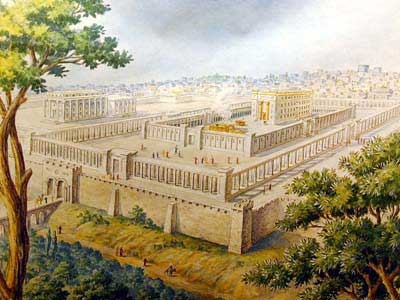
Jesus had prophesied the destruction of ancient earthly Jerusalem and its Jewish temple:
“Now as He drew near, He saw the city and wept over it, saying, if you had known, even you, especially in this your day, the things that make for your peace! But now they are hidden from your eyes. For days will come upon you when your enemies will build an embankment around you, surround you and close you in on every side, and level you and your children within you, to the ground; and they will not leave in you one stone upon another, because you did not know the time of your visitation” (Luke 19: 41-44; 13: 34-35; 21: 20-24; Matthew 23: 37-38).
The prophecy was literally fulfilled by the final total destruction of Biblical Jerusalem and its Jewish temple in 70 A.D. by the Romans in an unprecedented inferno, which was almost unparalleled in mankind’s bloodiest historical upheavals. The whole city and temple were razed to the ground as Jesus prophesied: “and level you, and your children within you, to the ground; and they will not leave in you one stone upon another” (Luke 19: 44a). The great part of the Israelite population, that was not massacred in the bloody Jewish war of 66-70 A.D. and the Bar-Kokhba rebellion of 132-135 A.D., was sold into slavery, again fulfilling the second part of Jesus’ prophecy: “And they will fall by the edge of the sword, and be led away captive into all nations” (Luke 21: 24a). In this respect, it is worth noting that although the abuse of temple articles had caused God’s wrath on the Babylonian king Belshazzar and the fall of the Babylonian kingdom to the Persians (Daniel 5), the abuse of temple articles by the Romans, more than six centuries thereafter, did not result in God’s judgment on the Roman Empire (the seven-branched golden lampstand and the table of the showbread were placed in the pagan temple of peace in Rome). In the post-Christ era, neither the temple nor its holy articles meant anything to God. In the post-Christ era, God has arranged that the ethnic Israelite identity be diluted, and the tribal identity completely disappear.
The destruction of the Jewish temple of Jerusalem signified the end of animal sacrifices that had been offered in accordance with the Mosaic law of the Torah, and confirmed the beginning of the new covenant of grace for those that believe in Christ, the Son of God. These animal sacrifices symbolized the all-sufficient sacrifice of Christ on the cross.
C. The Position of the Qur'an on the Divinity of Christ
(return to list of contents)
The position of the Qur’an on the divinity of Christ is contradictory. The Qur’an contains verses that strongly support the divinity of Christ and others that deny it.
1. The Qur’an supports the divinity of Christ when it distinguishes Him from all creation by calling Him the “Word of God:” “The angels said: ‘O Mary, God gives you good news of a Word from Him. His name is the Messiah, Jesus son of Mary…” (Al-Imran 3: 45, 39; al-Nisa’ 4: 171). These verses indicate that the Word of God is not to be understood as the spoken word of God (utterance of God) to the prophets. It is a person of the eternal uncreated essence of God. It indicates the Person of Christ. Arabic grammar supports that understanding. Although the Arabic word for “Word” is feminine, it is followed by the masculine possessive pronoun in Al-Imran 3: 45: “…His name is the Messiah…” If the intended meaning were a spoken word, its possessive pronoun has to be in the feminine gender. The Person of the Word that issues form God (the Father) has the same divine nature and attributes of God (the Father). The Word of God is eternal and uncreated. He had predated Mary. For the same reason, Sunni Islam believes that the Qur’an is eternal and uncreated.
2. The Qur’an supports the divinity of Christ when it calls Him “the Spirit of God:” “…the Messiah, Jesus son of May, is God’s apostle, and His Word that He cast to Mary, and a Spirit form Him…” (al-Nisa’ 4: 171; al-Baqarah 2: 87, 253; al-Ma’idah 5: 110; al-Anbiya’ 21: 91; al-Tahrim 66: 12).
The Word of God and the Spirit of God are God Himself as the Word and the Spirit are inseparable from their source. It is important to point out that the Qur’an does not call any prophet that way. These titles are reserved for Christ alone.
The above is in agreement with the biblical teachings on Christ: “In the beginning was the Word, and the Word was with God, and the Word was God. And the Word became flesh and dwelt among us, and we beheld His glory, the glory as of the only begotten of the Father, full of grace and truth” (John 1: 1, 14; Revelation 19: 13). The eternal Word (Son) of God and the Spirit of God are equal to God in divinity. God the Father, His Word (Son), and His Holy Spirit are one God.
3. The Qur’an supports the divinity of Christ when it states that Christ has the powers reserved for God alone.
(a) He knows all hidden things: “…I (Jesus) will tell you what you eat and what you hoard in your homes…” (Al-Imran 3: 49), whereas all the prophets and messengers of God do not know these hidden things: “One day God will gather all the apostles and ask them: ’How were you received? They will reply: ‘We have no knowledge. You alone know what is hidden’’” (al-Ma’idah 5: 109; al-An’am 6: 50; al-A’raf 7: 188). The Qur’an reserves this knowledge to God alone (al-An’am 6: 59; ar-Ra’d 13: 9; an-Naml 27: 65; al-Hujurat 49: 18; al-Jumu’ah 62: 8).
(b) He has the power to create life (birds) from clay: “…I (Jesus) bring you a sign from your Lord. From clay I will create for you the likeness of a bird. I shall breathe into it and, by God’s leave, it shall become a living bird. By God’s leave, I shall heal the blind man and the leper, and raise the dead to life…” (Al-Imran 3: 49; al-Ma’idah 5: 110). The Qur’an states that God created man in the same way: “…He first created man from clay. He molded him and breathed His spirit into him…” (al-Sajdah 32: 7, 9; al-An’am 6: 2; al-Hijr 15: 28-29; Sad 38: 71-72). This attests the divinity of Christ, because the Qur’an reserves the power of creation to God alone: “…God first brings the creation into being, and will then restore it…” (Yunis 10: 34; Yasin 36: 77, 81; al-Hijr 15: 86; an-Nahl 16: 17, 20; al-Hajj 22: 73; al-Fatir 35: 40; al-An’am 6: 102; Ar-Ra’d 13: 16; Az-Zumar 39: 62; al-Mu’min 40: 62; al-Hashr 59: 24; etc.). In fact, the Qur’an uses the same verb “create” only for the creative acts of God and Jesus. Even angels could not create life from no-life.
(c) Christ also has the power to raise the dead (Al-Imran 3: 49; al-Ma’idah 5: 110). The Qur’an reserves the power of raising the dead to God alone: “It is He (God) who has given you life, and will cause you to die, and then will bring you back to life…” (al-Hajj 22: 66; al-Hijr 15: 23; al-Mu’minun 23: 80; al-Rum 30: 50; Yasin 36: 12, 78-79; Qaf 50: 43). Christ explained these powers in the Gospel saying: “For as (God) the Father raises the dead and gives life to them, even so the Son gives life to whom He will. Most assuredly, I say to you, the hour is coming, and now is, when the dead will hear the voice of the Son of God; and those who hear will live. For as the Father has life in Himself, so He has granted the Son to have life in Himself” (John 5: 21, 25, 26).
4. The Qur’an supports the divinity of Christ when it states that Christ is immune from sin. According to the Qur’an, all humans, including all the prophets, have committed transgressions and sinned except one person—Jesus Christ. He is perfect and immune form faults and sin. The Qur’an states that all humans have sinned: “There is not one among you who shall not pass through it (hell). Such is the absolute decree of your Lord” (Mary 19: 71; al-Nur 24: 21). The Qur’an also states that all the prophets have sinned: “…Adam disobeyed his Lord, and went astray” (Taha 20: 121; al-Baqarah 2: 36; al-A’raf 7: 22-23; al-shu’ara’ 26: 20, 82; al-Qasas 28: 16; as-Saffat 37: 142; Sad 38: 24; al-Mu’min 40: 55; Muhammad 47: 19; al-Fath 48: 2; Nuh 71: 28…etc). In addition, we note the following Hadith in Sahih Muslim and Sahih al-Bukhari: “None of you will get into paradise except for the mercy of God. It is said: ‘Not even you (Muhammad) O messenger of God ?’ He (Muhammad) said: ‘Not even I unless God grants me His mercy.’”
The Qur’an emphasizes the unique position of Christ who is perfect without fault or sin “…He (God) has purged Me (Jesus) of vanity and wickedness…” (Mary 19: 31-33, 19; Al-Imran 3: 36, 46). The position of the Qur’an on the unique purity of Christ and immunity from faults and sin agrees with the Gospel’s: “Who committed no sin, nor was deceit found in His mouth” (1 Peter 2: 22; John 8: 46; Hebrews 4: 15; etc.). This position supports the divinity of Christ because only God is perfect and immune from fault and sin.
5. The hadith supports the divinity of Christ when it declares that he is the final judge in the Day of Judgment: “In the final hour, the son of Mary will judge you” (Sahih al-Bukhary, vol 3, p. 107; 4.55.657; 3.34.425). This is in agreement with the teaching of the Gospel: “(God) The Father judges no one, but has committed all judgment to the Son (Christ)” (John 5: 22, 27; Romans 2: 16; Matthew 13: 41-43; Revelations 22: 12). The final judgment is God’s alone. No human person could replace God in it. The fact that Islam admits that Christ is the final judge supports the divinity of Christ.
6. Despite the strong support of the Qur’an for the divinity of Christ as shown above, it contradicts itself by denying the divinity of Christ in a number of verses: “…The Messiah, the son of Mary, was no more than an apostle. Other apostles passed away before him…” (al-Ma’idah 5: 75, 17, 72, 116; an-Nisa’ 4: 171; al-Tawbah 9: 30-31; Yunis 10: 68; al-Isra’ 17: 111; al-Kahf 18: 4-5; Mary 19: 35, 88-93; al-zukhruf 43: 81-83; al-Ikhlas 112: 3; etc). This is one of the many problematic internal contradictions in the Qur’an. This contradiction points to the diverse sources of the Qur’an which utilizes orthodox sources that confirm the divinity of Christ, as well as heretical sources that deny it. The Ebionites, a heretical Christian sect that existed in Mecca at the time of Muhammad, denied the divinity of Christ and his crucifixion. In fact, Warraqa ibn Nophal, the cousin of Khadija (Muhammad’s first wife), was the Ebionite Christian bishop of Mecca. The Mariamists, an insignificant heretical Christian sect that disappeared at the end of the seventh century, taught that Mary, the mother of Christ, was a goddess. Another Christian heresy taught that the human nature of Jesus was absorbed by, and converted to, the divine nature of God. Main stream Christianity has fought and condemned all these heresies.
7. All the principal authors of the New Testament (Injil; etc.) writings—Matthew, Mark, Luke, John, Paul, and Peter—attest to the divine claims, nature, and prerogatives of Jesus. These men wrote from thirty to sixty years after Jesus’ death. They all either knew him personally or knew people who had known him personally. By contrast, Muhammad did not know Jesus, and did not know anyone who had ever seen him? Muhammad lived more than five hundred years later in a different culture and in a different country (Arabia), and it is on the basis of his teaching alone that Islam regards Jesus as a great prophet but not divine. From a strictly historical perspective, the multiple testimonies of the first century New Testament authors must take precedence with regard to understanding who and what Jesus claimed to be.
III. COROLLARY
(return to list of contents)
Every layer of Christian teaching since the dawn of the Christian era emphasizes the divinity of Christ. It is impossible to claim that Jesus’ deity was a later invention by zealots, or an evolution of Christology. Not only John’s gospel presents Jesus as divine, but all the New Testament books, including Mark’s gospel, the Pauline epistles, etc., teach the deity of Jesus. In fact, the earliest available evidence from the very decade of Jesus crucifixion emphasizes the divinity of Jesus. For the earliest Christians, Jesus was more than a prophet and more than the Messiah. He was the eternal Son of God of the very one divine essence of God.
In more than one field of science, it appears that reality discovered by observation is too strange for human logic to comprehend. However, where human logic and strong evidence clash, it is prudent to adhere to the evidence, because this may lead to a wider logic and a new open horizon, whereas the opposite approach closes the door to discovering the truth.
The strong evidence presented herein proves the deity of Jesus Christ. However, it is important to point out that no intellectual argument, however powerful it may be, could, of itself, instill this essential concept in the heart of a person. These series of arguments and evidence could only attempt to capture what faith in Jesus Christ knows—that Christ is the divine Son of the heavenly Father. Faith in the divinity of Christ is a gift form God the Father through the Son by the Holy Spirit. Christ said: “Blessed are you, Simon Bar-Jonah, for flesh and blood has not revealed this to you, but My Father who is in heaven” (Matthew 16: 17); “No one speaking by the Spirit of God calls Jesus accursed, and no one can say that Jesus is Lord except by the Holy Spirit” (1 Corinthians 12: 3). God grants this gift to those that seek the truth.

The deity of Jesus Christ is very consistent with the oneness of God.